
ESG
A reporting cycle that survives assurance
Double materiality, ESRS datapoints, emissions and targets, supplier due diligence and the evidence to back all of it. Built for teams facing their first assured CSRD report and wondering where the numbers will actually come from.

The reporting cycle, end to end
Four stages, each feeding the next. What you decide is material determines what you measure, what you measure is what you collect, and what you collect is what gets assured.
Decide what matters
Double materiality, documented
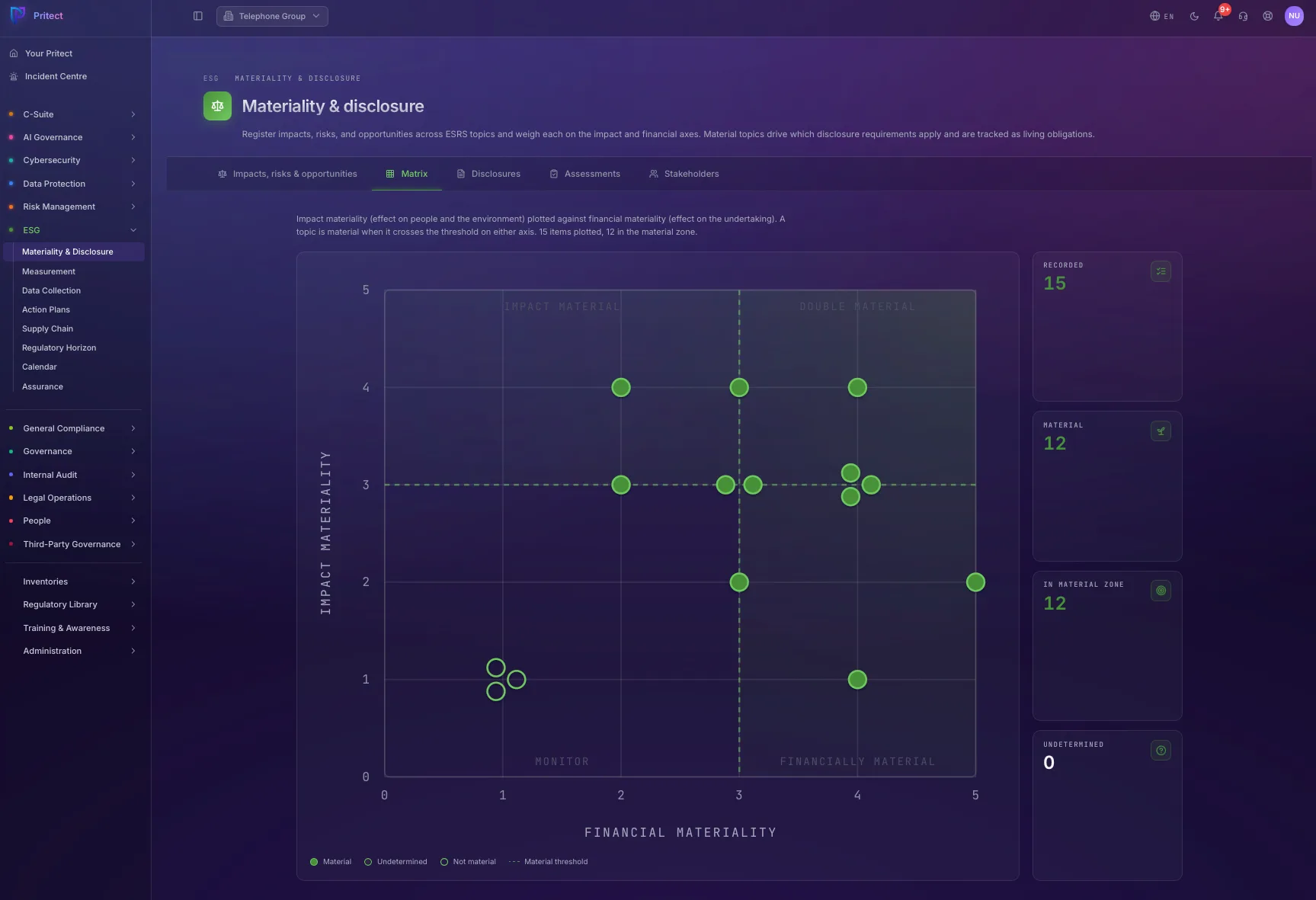
Run a double materiality assessment the way an auditor expects to see it. Impacts, risks and opportunities are captured on a register, scored on both the impact and the financial axis, and plotted on a matrix you can defend line by line.
- Impacts, risks and opportunities register
- Materiality matrix across both axes
- Stakeholder input captured against the record
- AI suggests candidate topics, you decide
- Assessment runs, versioned and signed off
Measure the numbers
ESRS datapoints and emissions
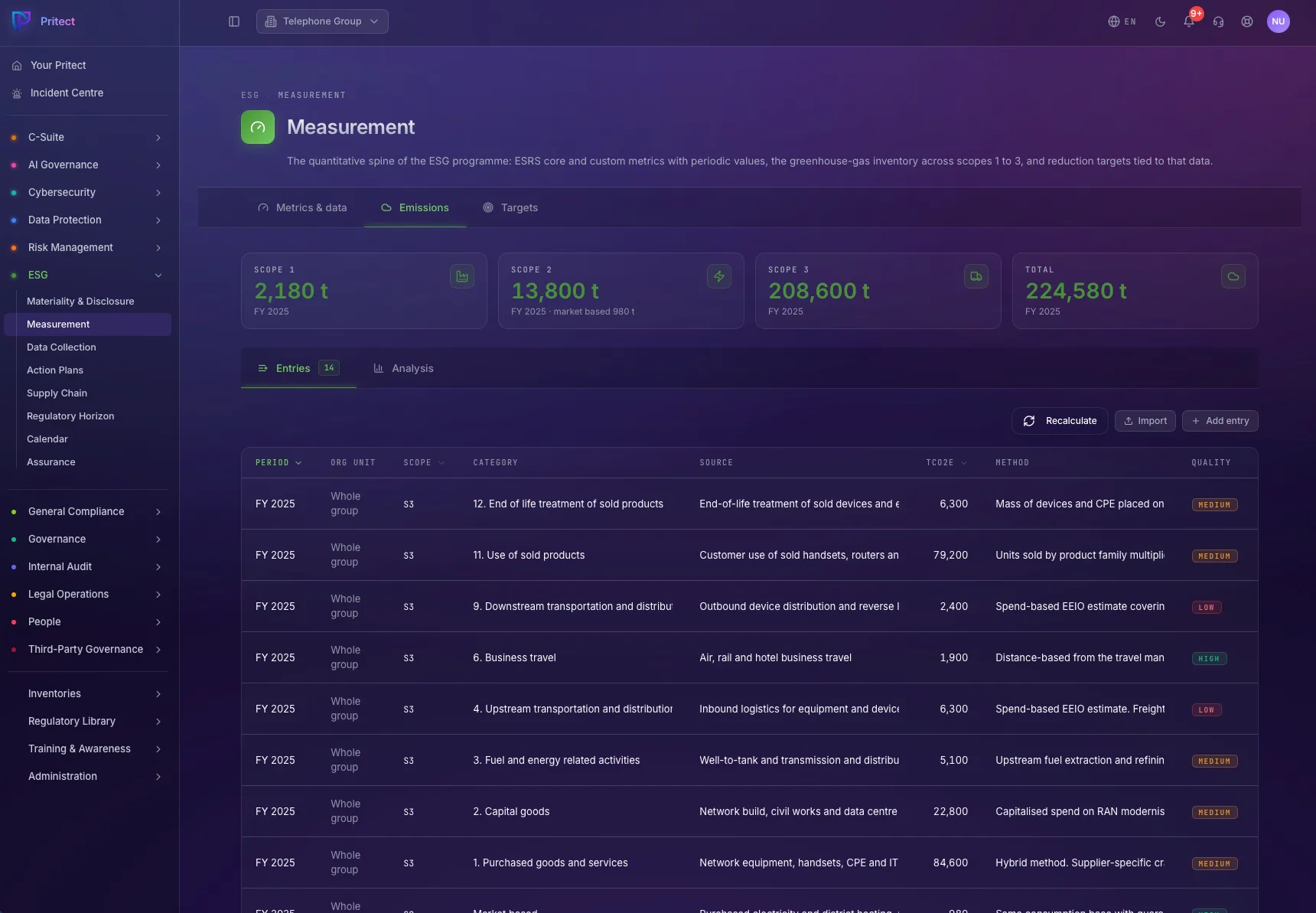
A metric catalogue covering the ESRS core set plus anything you add yourself, with periodic datapoints and trends. Emissions are recorded across scopes 1, 2 and 3 with scope 3 categories tagged, and targets carry a baseline, a trajectory and a transition plan.
- ESRS core and custom metrics, with trends
- Scopes 1, 2 and 3, with scope 3 categorisation
- Targets with baseline, trajectory and transition plan
- Pull values already held elsewhere in Pritect
Collect from the business
And from the supply chain
Chasing numbers by spreadsheet is where most reporting cycles are lost. Send per-metric requests to the people who hold the data, track what has come back, and run ESG and CSDDD assessments across suppliers through the same questionnaire portal the rest of the platform uses.
- Data collection campaigns, per metric and per owner
- Supplier ESG and CSDDD assessments
- Findings promote straight into enterprise risk
- A reporting calendar and annual wheel
Prove it to the assurer
Evidence, sampling and sign-off
CSRD reporting is assured, so the evidence trail is the product. Datapoints carry their evidence, samples are drawn and tracked, requests are worked through to closure, and your external auditor gets scoped access to exactly what they need and nothing else.
- Evidence bound to the datapoint it supports
- Sampling and assurance requests
- Scoped external auditor access
- Sign-off, with the trail behind it
Sustainability reporting, on the governance platform
ESG is not a separate tool bolted alongside. It runs on the same suppliers, the same risk register and the same evidence trail as everything else you govern.
CSRD and ESRS, structured
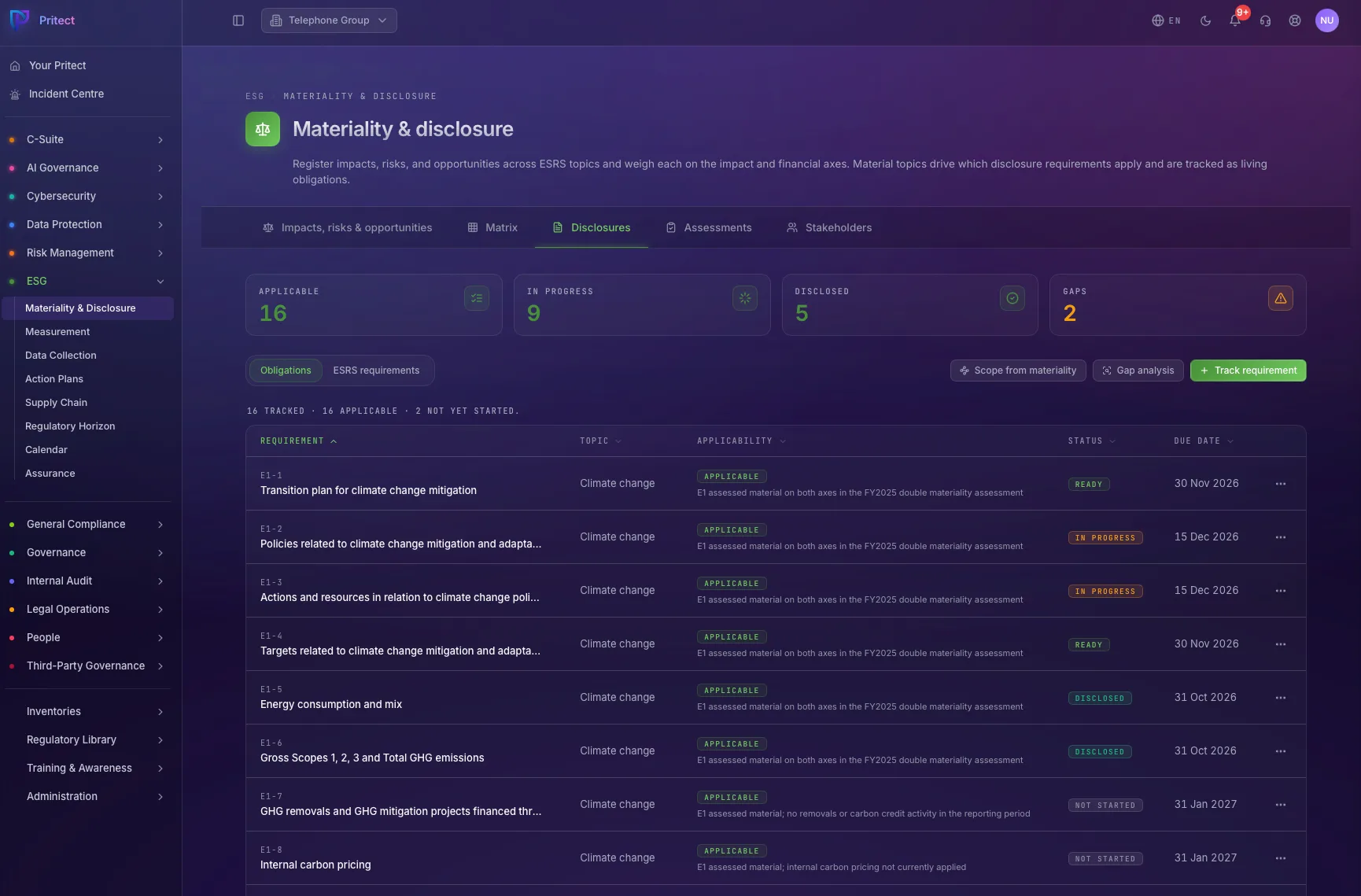
Disclosure requirements behave like living obligations with owners and status, not a checklist someone rebuilds in a spreadsheet each year.
AI that drafts, never decides
Suggest material topics, analyse disclosure gaps and draft narrative disclosures. Every suggestion is a proposal you review before anything is written.
One shared record
Suppliers, assets and risks are the same records data protection, cybersecurity and enterprise risk already use. An ESG supplier finding becomes an enterprise risk without re-keying.
Multi-entity reporting
Consolidate across a group structure, with entity-level ownership underneath and a single reporting view on top.
Action plans that go somewhere
Initiatives carry budget, milestones and dependencies, and promote into the enterprise risk register when they need executive attention.
Regulatory horizon
Track what is coming for sustainability reporting alongside every other regime you follow, on the same scanner.
Start before the reporting year does
The hard part of CSRD is not the report. It is knowing, twelve months earlier, which numbers you will need and who owes them to you.